Digital Mammography for Breast Cancer Detection
Learn how digital mammography helps detect breast cancer, evaluate breast abnormalities, and guide further screening and diagnostic care
October 6, 2026

Digital Mammography for Breast Cancer Detection
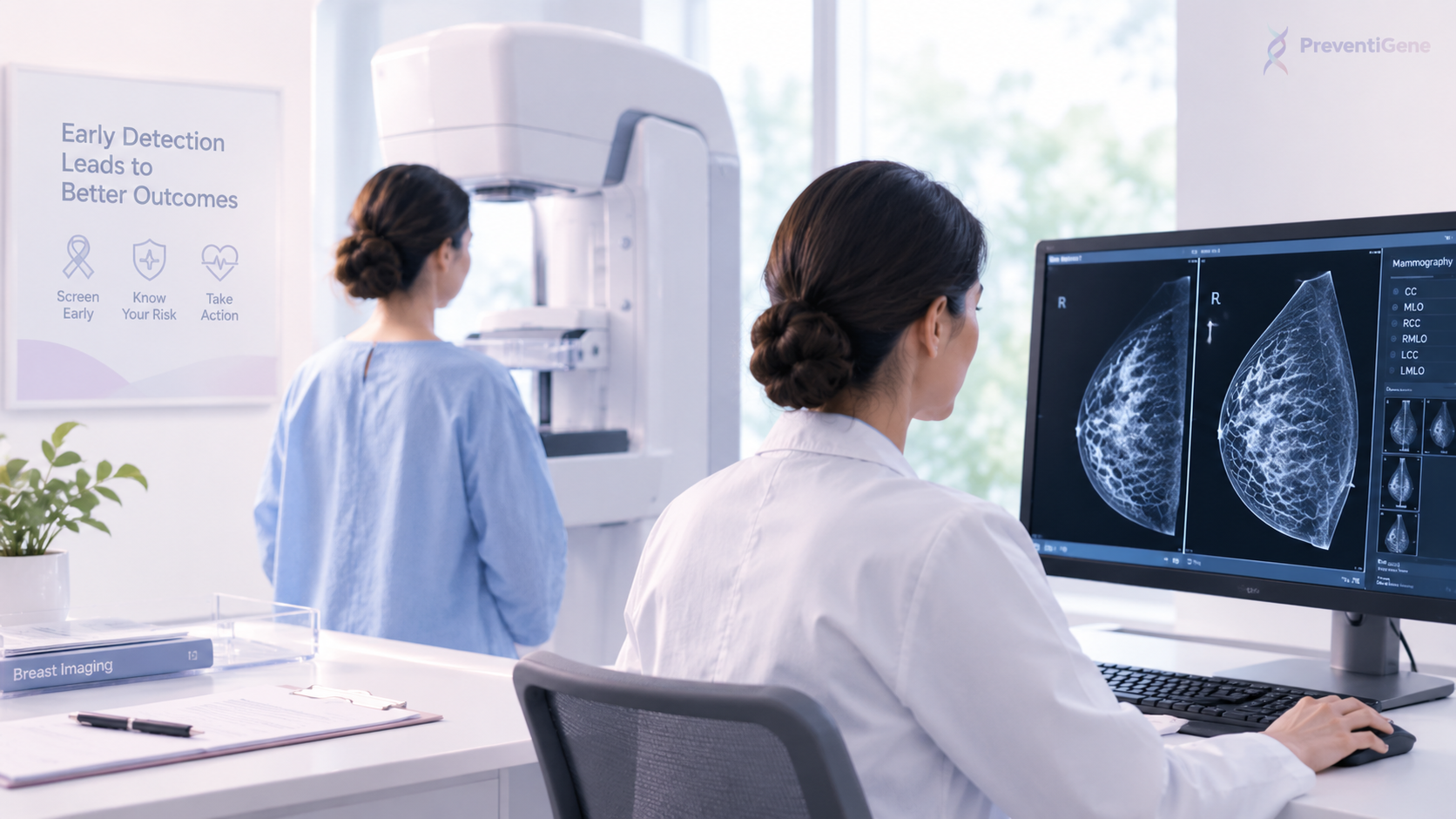
Digital mammography is one of the established breast imaging techniques used for breast cancer screening and diagnostic evaluation. It uses low-dose X-rays to create detailed images of the breast, helping radiologists identify findings such as masses, suspicious calcifications, asymmetries, and architectural distortions.
Unlike traditional film-screen mammography, digital systems capture breast images electronically, allowing them to be processed, enhanced, stored, and reviewed digitally. This has become an important part of modern breast imaging.
How Does Digital Mammography Help Detect Breast Cancer?
During a mammographic examination, the breast is gently compressed between two plates while X-ray images are obtained from standardized views. Compression helps reduce tissue overlap and improves image quality.
Radiologists assess mammographic images for findings that may require further evaluation, including:
Irregular or suspicious masses
Architectural distortion
Asymmetries
Suspicious microcalcifications
Changes compared with previous examinations
Other structural abnormalities
Mammography may identify breast abnormalities before they become palpable or produce noticeable symptoms, which is one reason it plays an important role in breast cancer screening.
Screening vs. Diagnostic Mammography
Digital mammography may be performed as either a screening examination or a diagnostic examination.
Screening mammography is performed in people without known breast abnormalities to look for early signs of breast cancer. Diagnostic mammography is used when a symptom, physical finding, or abnormal screening result requires a more focused evaluation.
Additional mammographic views may be obtained during a diagnostic examination to better characterize a particular area of concern.
Mammographic findings are commonly assessed using the Breast Imaging Reporting and Data System (BI-RADS®), a standardized framework developed by the American College of Radiology to describe breast imaging findings and communicate assessment and management recommendations. The current BI-RADS v2025 framework covers mammography as well as breast ultrasound, MRI, and contrast-enhanced mammography.